Concept vessel · Design review 2026
Ironmark XG-1
A fifth-generation semi-submersible designed around one question: how few people do we actually need on the drill floor? Answer, so far — none.
Concept reel
The Ironmark XG-1, in motion.
A 22-second design reel assembled from the current concept renders. Silent by design — play it on a rig floor and nobody hears the music anyway.
Ironmark XG-1 concept reel — Xtragate Oil Engineering, August 2026. Renderings are conceptual and do not represent a constructed vessel.
Design intent
Take the people off the floor.
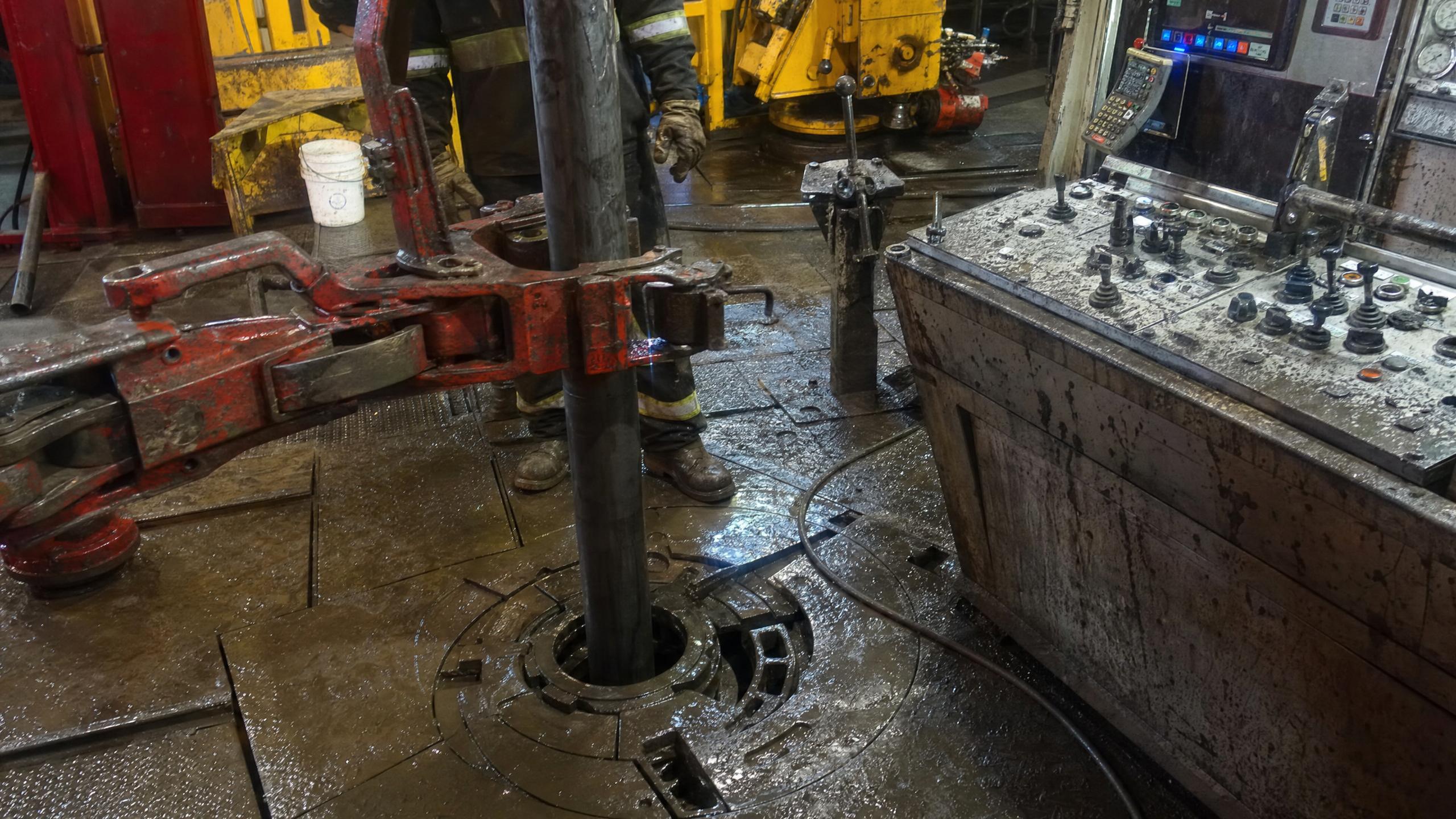
Nearly every serious injury on a drilling rig happens in the same forty square feet: the drill floor, during pipe handling. The Ironmark XG-1 removes that exposure by removing the requirement for a human being to stand there.
Two robotic pipe-handling arms work the mousehole and the setback. Tripping is supervised from a sealed control cab twelve metres away, and from Midland if the weather turns. The derrickman's job still exists — it just happens sitting down, looking at a screen, with a coffee.
Everything else follows from that decision. Fewer people means smaller quarters, less catering, fewer crew-change flights, a lighter topside and a hull that can hold station in worse weather on less fuel.
Specification
Ironmark XG-1 — concept spec sheet
| System | Concept specification | Fleet benchmark (Rig 17/18) |
|---|---|---|
| Hull type | Ring-pontoon semi-submersible, DP-3 dynamic positioning | Eight-point moored semi |
| Water depth | 10,000 ft | 8,000 ft |
| Drilling depth | 35,000 ft | 30,000 ft |
| Hookload | 2,500,000 lb | 2,000,000 lb |
| Drawworks | Dual 4,000 hp AC regenerative | 3,000 hp AC |
| Pipe handling | Two 6-axis robotic arms, zero manual intervention | Iron roughneck + floorhands |
| Pressure control | Closed-loop MPD standard, 20,000 psi BOP | 15,000 psi BOP |
| Riser | Composite-titanium hybrid, 21 in. bore | Steel, 21 in. bore |
| Core crew | 32 persons | 68 persons |
| Accommodation | 80 berths | 150 berths |
| Helideck | Bell 412EPX / S-92 capable, twin approach | Bell 412EPX capable |
| Power | 6 × dual-fuel gensets + 12 MWh battery hybrid | 6 × diesel gensets |
| Fuel intensity | Est. 38% lower per drilling day | Baseline |
| Station keeping | Operable to Hs 6.5 m, survival Hs 16 m | Operable to Hs 4.5 m |
| Status | Concept — design review, no steel cut | In service |
All Ironmark XG-1 figures are design targets from internal concept studies and are subject to change through class approval and FEED.
Systems
Five things that make it different
Ironhand robotic floor
Two six-axis arms handle every joint from catwalk to setback. The floor is a machine space, not a workspace.
Closed-loop MPD as standard
Pressure managed continuously rather than reactively. Narrower margins become drillable and kicks get smaller.
Hybrid battery power
A 12 MWh pack absorbs drawworks regeneration and shaves peak load, cutting genset hours and fuel burn.
Remote operations link
Full drilling telemetry and control handover to our Midland centre, so specialists advise without flying offshore.
Dual-activity derrick
Offline stand building and casing prep in parallel with drilling. Target: 19% reduction in flat time.
Composite riser
A titanium-composite hybrid string cuts riser weight roughly a third, which is what unlocks 10,000 ft.
Gallery
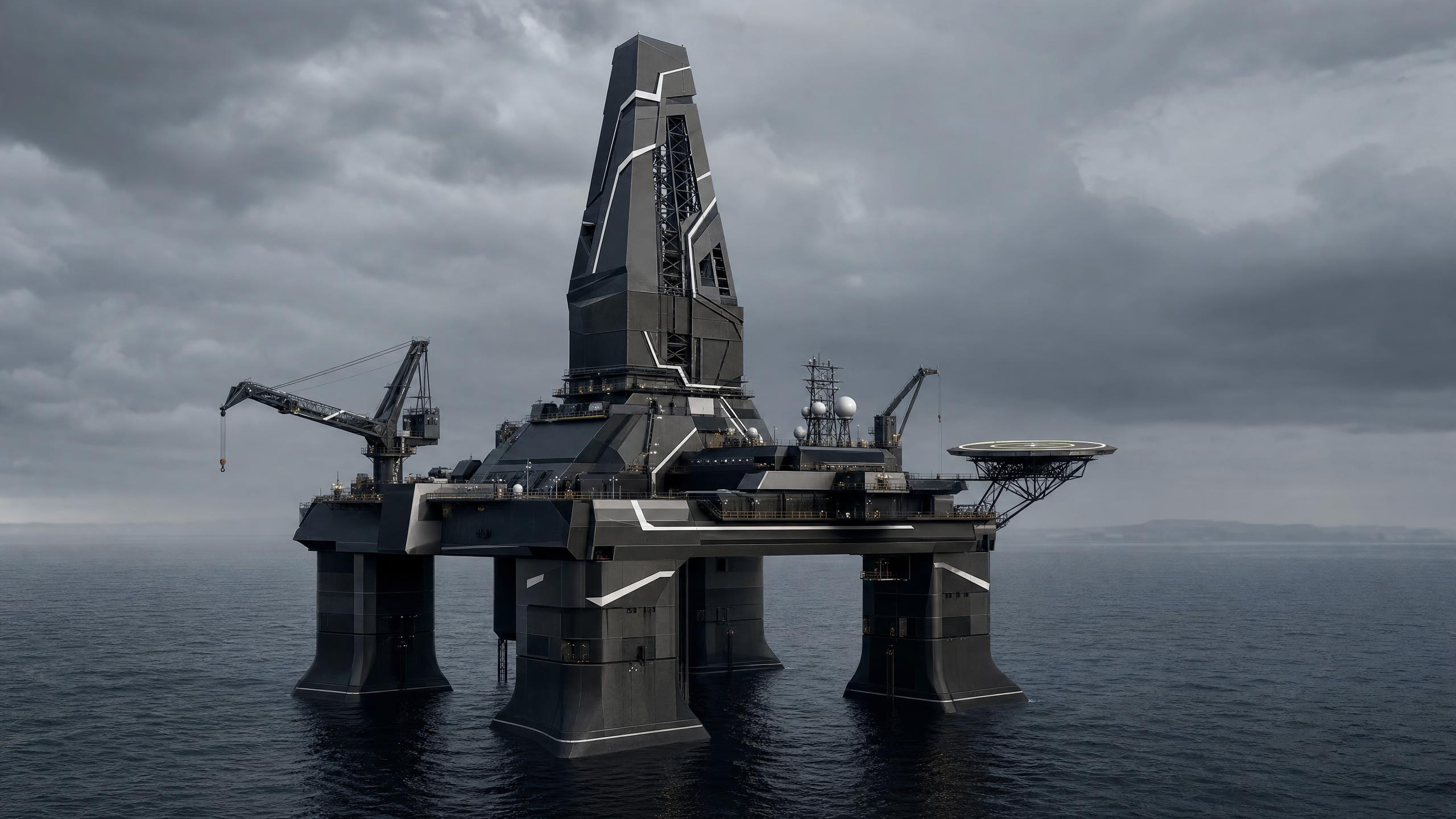
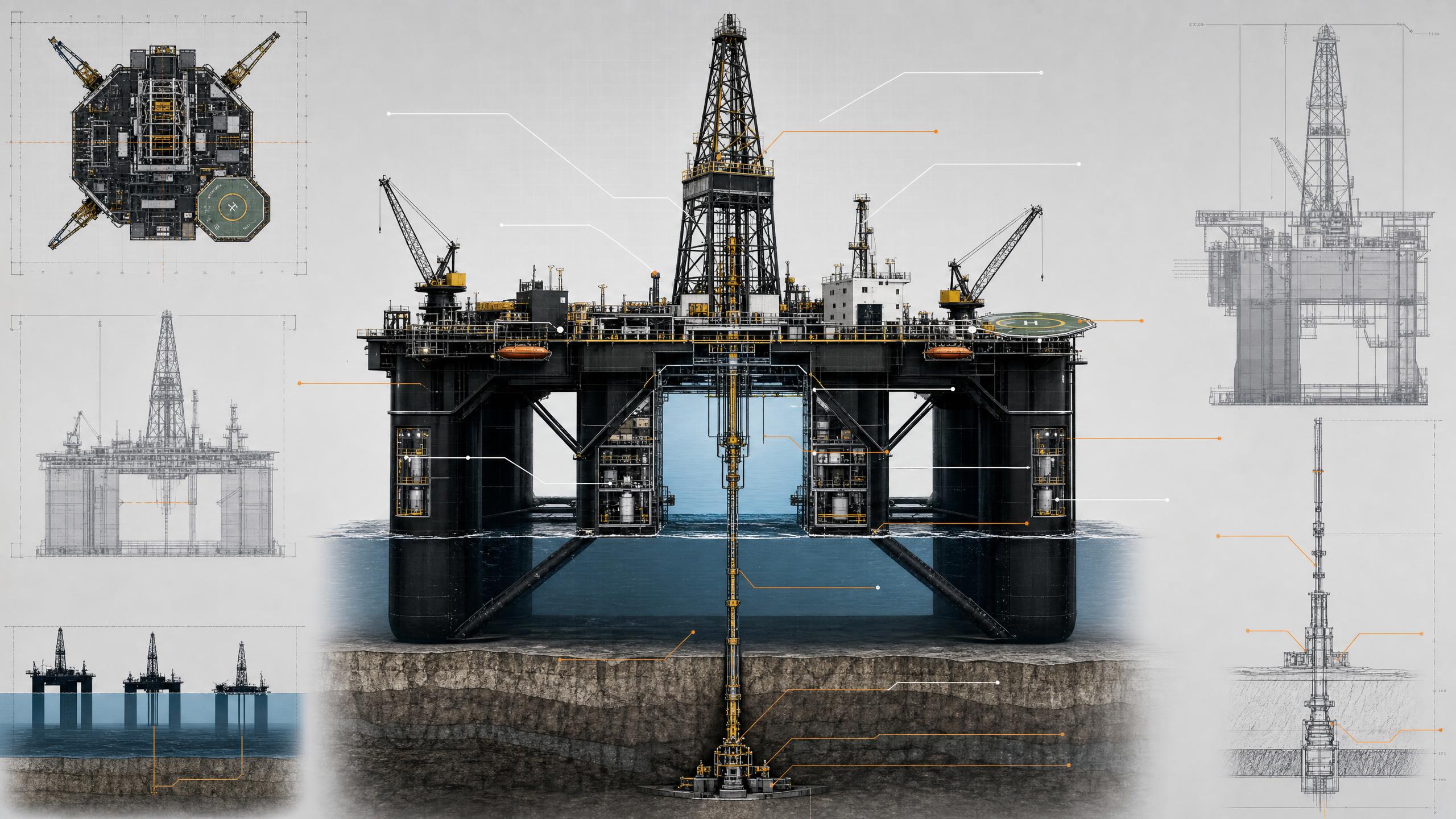
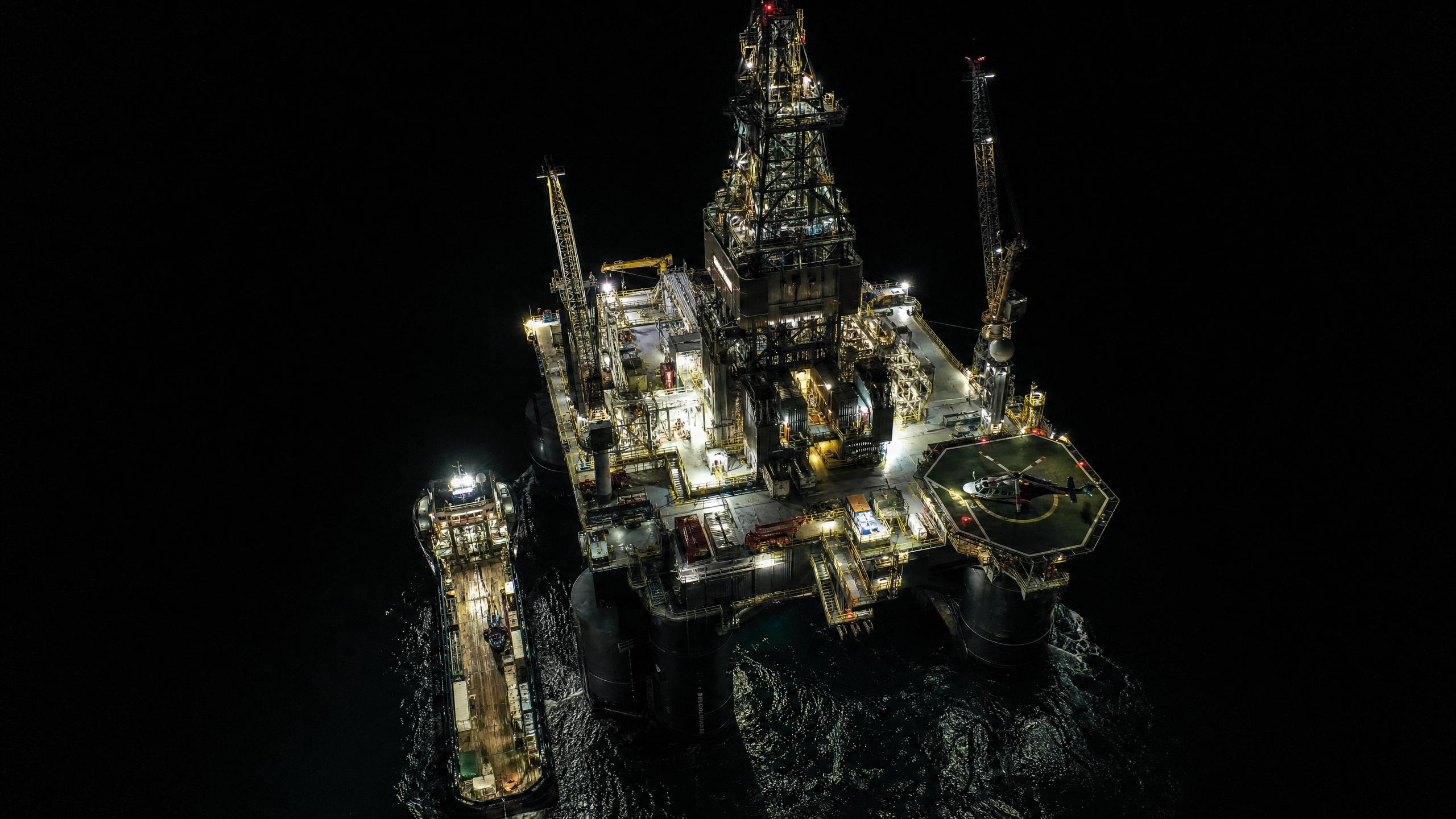
Concept imagery
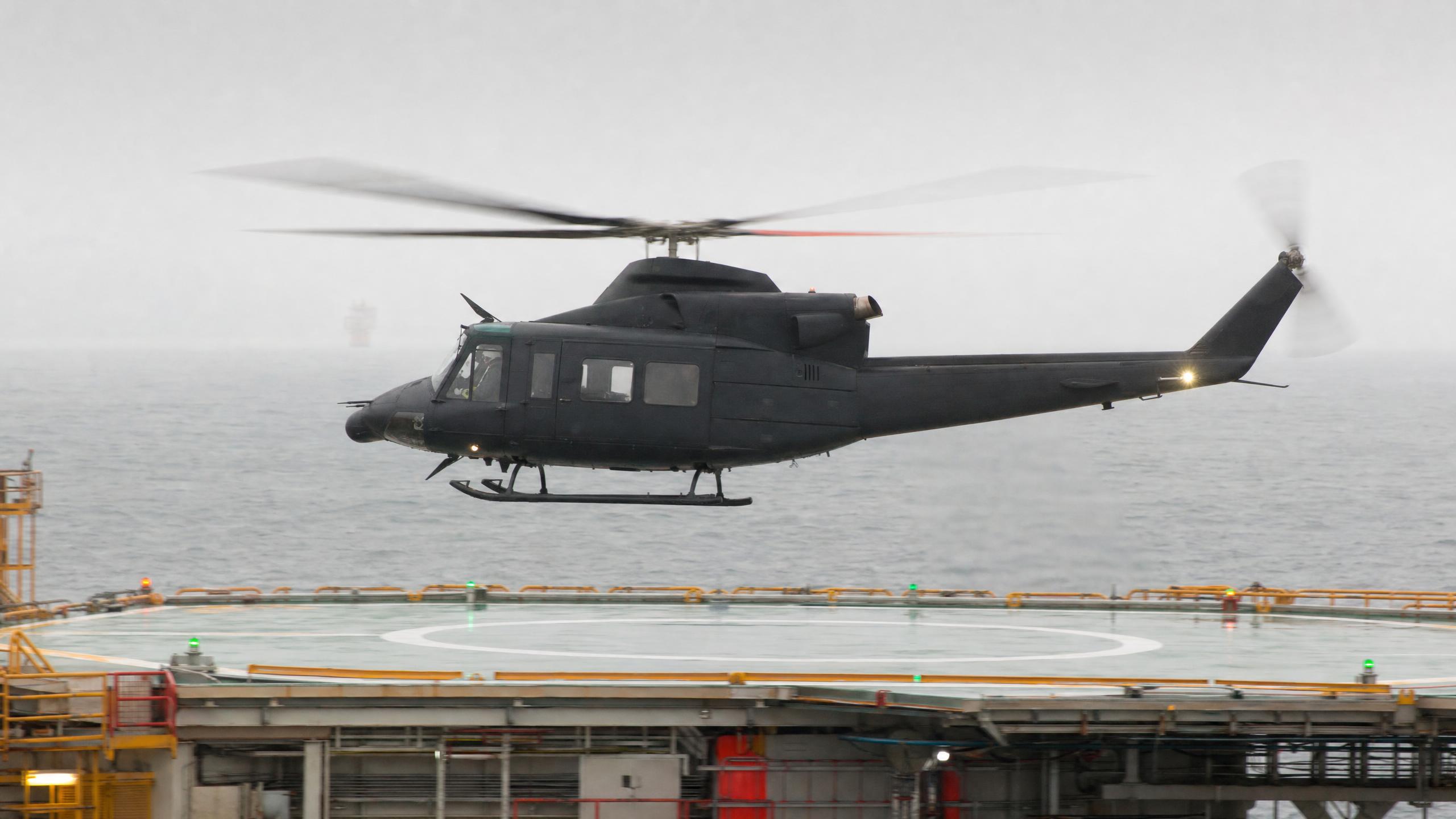
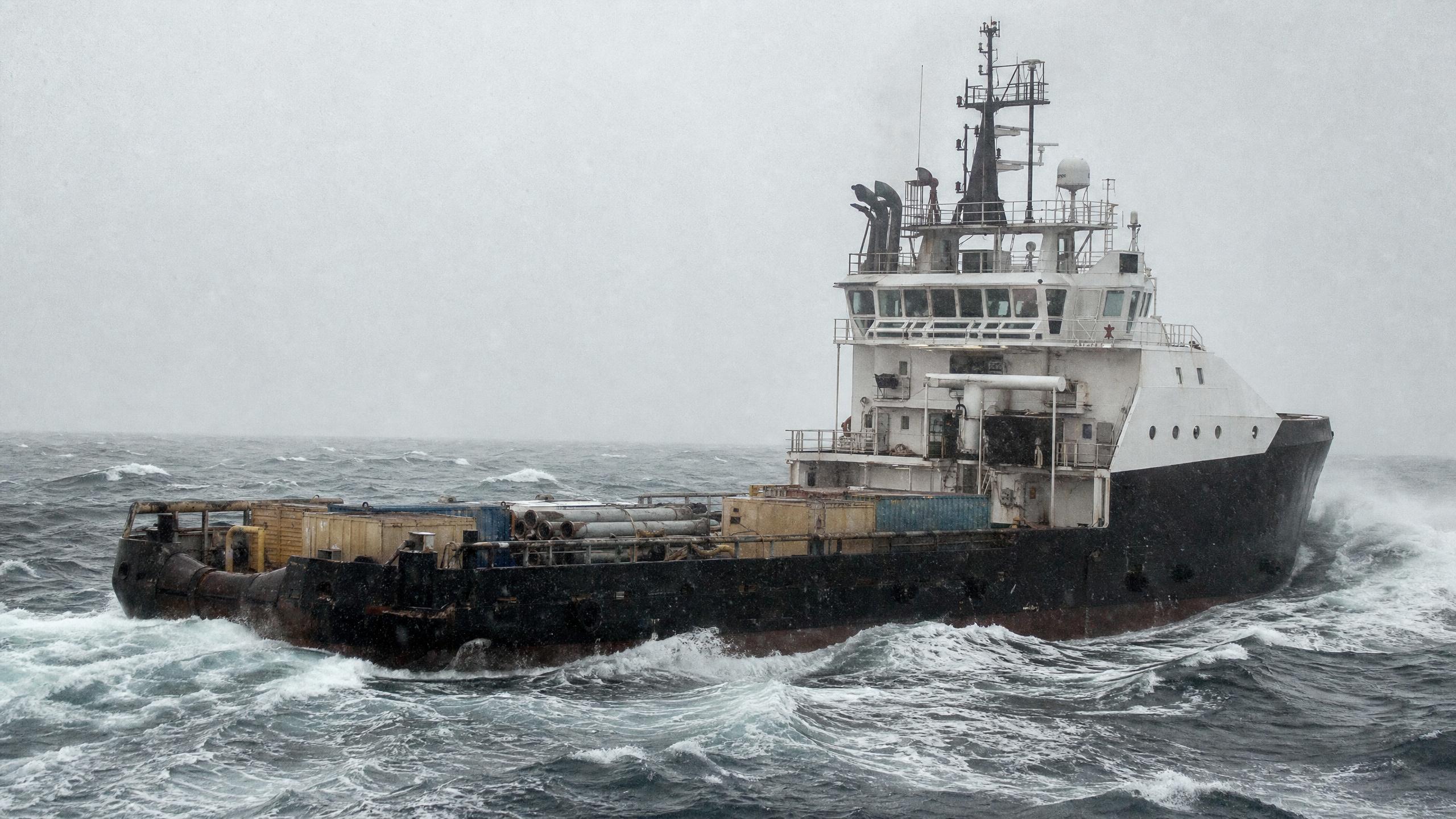
Programme
Where the concept stands
| Phase | Scope | Status |
|---|---|---|
| Phase 0 — Concept definition | Mission profile, manning study, hull form selection | Complete |
| Phase 1 — Design review | General arrangement, robotic floor mock-up, class pre-engagement | In progress, 2026 |
| Phase 2 — FEED | Front-end engineering, shipyard tendering, cost certainty | Planned 2027 |
| Phase 3 — Build decision | Board sanction, long-lead orders, steel cutting | Not sanctioned |
The Ironmark XG-1 is a concept. It has not been ordered, sanctioned or constructed, and no delivery date is offered or implied.
Questions about the concept
Is the Ironmark XG-1 available for charter?
No. It is a concept vessel in design review. Our available offshore capacity today is Rigs 14 through 18. Talk to us about those.
Why build a low-manning rig instead of a bigger one?
Because manning drives almost everything else — quarters, catering, lifeboats, helicopter sorties, topside weight and ultimately day rate. Cut the crew in half and the whole vessel gets cheaper to build and to run.
Does robotic pipe handling cost jobs?
It changes them. Our modelling keeps total headcount roughly flat across the company because the roles move to maintenance, controls, remote operations and mechanical trades — work that pays better and does not involve standing under a travelling block.
Who is designing it?
Xtragate's internal engineering group under Dr. Iyana Boateng, working with independent naval architects and in pre-engagement with a classification society.
Can we see the full technical package?
The Ironmark technical package is held internally and released under NDA to a short list of operators and yards we are already engaged with. It is not distributed on request.
How we take work.
The Ironmark programme is developed in-house and shared with a short list of operators and yards under NDA. There is no public enquiry route into it.